Galden_Phase_vapeur_LS_HT_SOLVAY_SYNESQO

Galden vapor phase consumable

Choose the right heat transfer fluid for your electronic soldering process


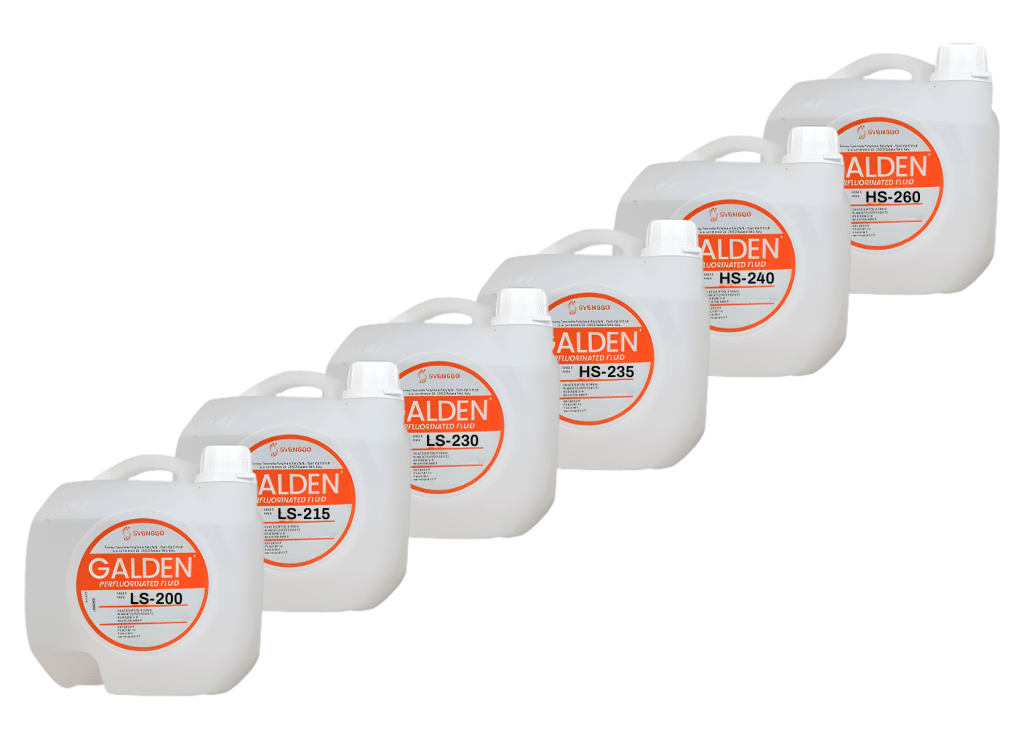
Vapor phase soldering technology is based on the condensation of the heat transfer fluid, ensuring uniform, precise and controlled heat transfer to the PCBa. The choice of the heat transfer fluid (Galden) determines the boiling point, the vapor temperature, and consequently the maximum process temperature. We supply Galden in LS (Low Soldering) and HS (High Soldering) grades:


  • LS200 (200°C) 
  • LS215 (215°C)   
  • LS230 (230°C)  
  • HS235 (235°C) 
    • HS240 (240°C) 
    • HS260 (260°C) 


    Supplied in 5 kg containers (equivalent to approximately 2.747 L of Galden)


    Contact us All our solutions


    Caractéristiques
    Caractéristiques (Fr) Specifications (Eng)

    Point d’ébullition / Boiling point


    LS200 : 200 °C
    LS215 : 215 °C
    LS230 : 230 °C
    HS240 : 240 °C
    HS260 : 260 °C

    LS200 : 200 °C
    LS215 : 215 °C
    LS230 : 230 °C
    HS240 : 240 °C
    HS260 : 260 °C

    Densité / Density

    LS200 : 1.79 g/cm³
    LS215 : 1.80 g/cm³
    LS230 : 1.82 g/cm³
    HS240 : 1.82 g/cm³
    HS260 : 1.83 g/cm³

    LS200 : 1.79 g/cm³
    LS215 : 1.80 g/cm³
    LS230 : 1.82 g/cm³
    HS240 : 1.82 g/cm³
    HS260 : 1.83 g/cm³

    Chaleur spécifique / Specific heat


    973 J/kg·°C

    973 J/kg·°C

    Chaleur de vaporisation au point d’ébullition / Heat of vaporization at boiling point


    63 J/g

    63 J/g

    Rigidité diélectrique (écart 2.54 mm) / Dielectric strength (2.54 mm gap)


    40 kV

    40 kV

    Constante diélectrique / Dielectric constant


    2.1


    2.1

    Résistivité volumique / Volume resistivity


    1 × 10¹⁵ Ohm·cm

    1 × 10¹⁵ Ohm·cm

    Poids moléculaire moyen / Average molecular weight

    LS200 : 870 amu
    LS215 : 950 amu
    LS230 : 1 020 amu
    HS240 : 1 085 amu
    HS260 : 1 210 amu

    LS200 : 870 amu
    LS215 : 950 amu
    LS230 : 1 020 amu
    HS240 : 1 085 amu
    HS260 : 1 210 amu

    SMD soldering without overheating

    What are the key advantages of Galden ? 

    Controlled temperature point 


    In vapor phase soldering, precise temperature control is essential to ensure uniform and defect-free reflow, especially for assemblies with complex geometries or high component density.

    he condensation of Galden vapor allows perfectly uniform temperatures up to 260 °C, preventing cold joints or overheating that could damage the integrity of SMD components.

    Unlike other fluids, Galden retains its properties even after many cycles, making it a reliable and durable consumable for vapor phase reflow processes.

     

    Nitrogen-free vapor phase soldering for electronics

    Chemical stability and total inertness


    Thanks to its perfluorinated molecular structure, Galden exhibits exceptional chemical inertness, making it fully compatible with most industrial materials, including sensitive metals, plastics and composites. It does not decompose, form residues, or react with system components, thereby extending equipment lifespan. 


    Galden phase vapeur brasage CMS - Distribué par Pyrox Division Electronique

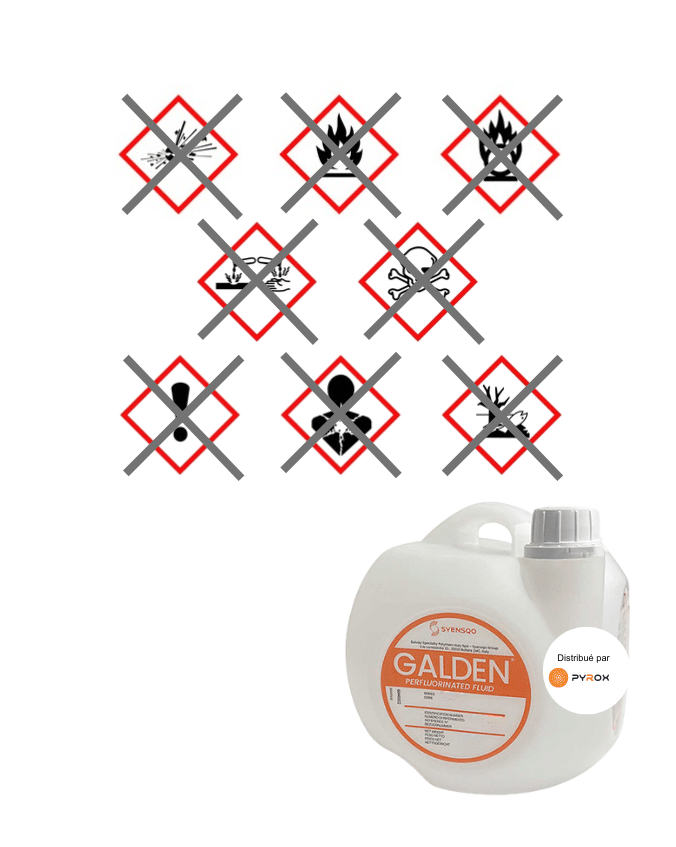
    Enhanced safety: non-flammable, non-explosive


    Galden has no flash point and no risk of self-ignition, making it extremely safe to handle, even in high-temperature environments. It produces no explosive vapors, and in the event of a thermal incident, its decomposition gases remain manageable with proper ventilation systems.


    Finally, it creates an inert atmosphere without the need for nitrogen, preventing oxidation during soldering and ensuring clean, residue-free solder joints without defects related to ambient conditions.


    Phase vapeur Galden LS HT

    What is the environmental impact of Galden?


    Galden has a well-controlled environmental profile: it is non-toxic, non-flammable, non-polluting, and exhibits very low solubility in water. Although it is not biodegradable, its high chemical stability allows it to be recovered, filtered, and effectively reused in industrial environments. Compliant with the RoHS directive, it contains neither lead nor toxic halogens. However, at the end of its life, it must be disposed of through specialised channels to comply with environmental regulations.


    SnPb et Leadfree vapor phase

    Can a single grade of heat transfer fluid be used for several types of alloys?


    Yes, provided that the boiling point of the selected heat transfer fluid is always higher than the reflow temperature of the alloy.

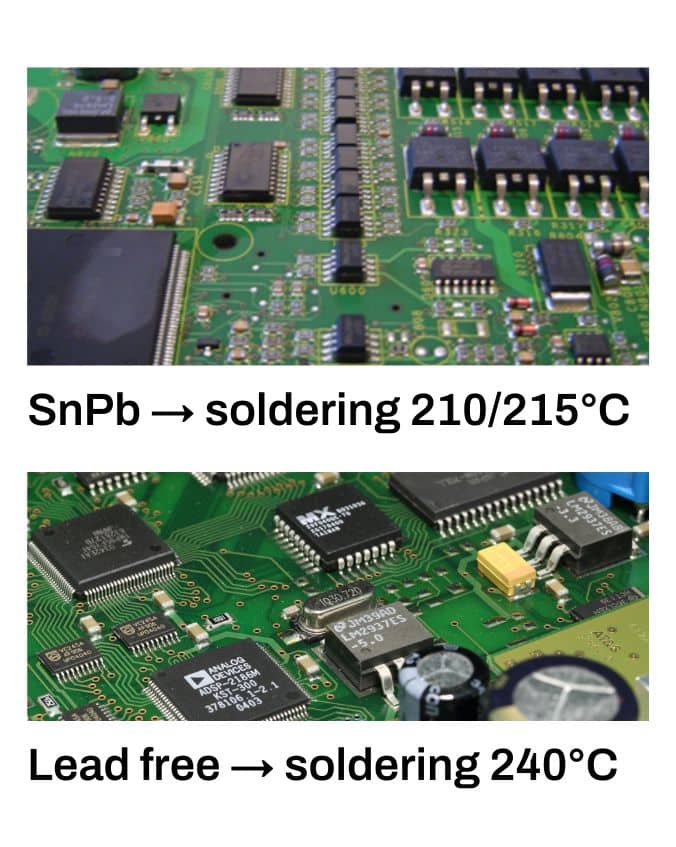
    For example, with HS240, used in an IBL Premium range machine, both processes can be carried out successively: SnPb (210°C / 215°C max) and lead-free (SnAg and/or SnAgCu = 240°C max).

    The group


    We are able to offer our clients an end-to-end approach thanks to our technical skills and the experience of our teams.

    A 360° value proposition in thermal equipment for research laboratories and industry


    Tailor-made and standard technology solutions for a wide range of applications


    A unique and advanced technological solution dedicated to the oxidation phase involved in the manufacture of VCSELs


    Want to know more?


    Contact our team


    Get precise information about our services.